The LinkedIn profile checklist for founders
 Vaibhav Yadav · Founder, BeNoStranger · 12 October 2026 · 6 min read
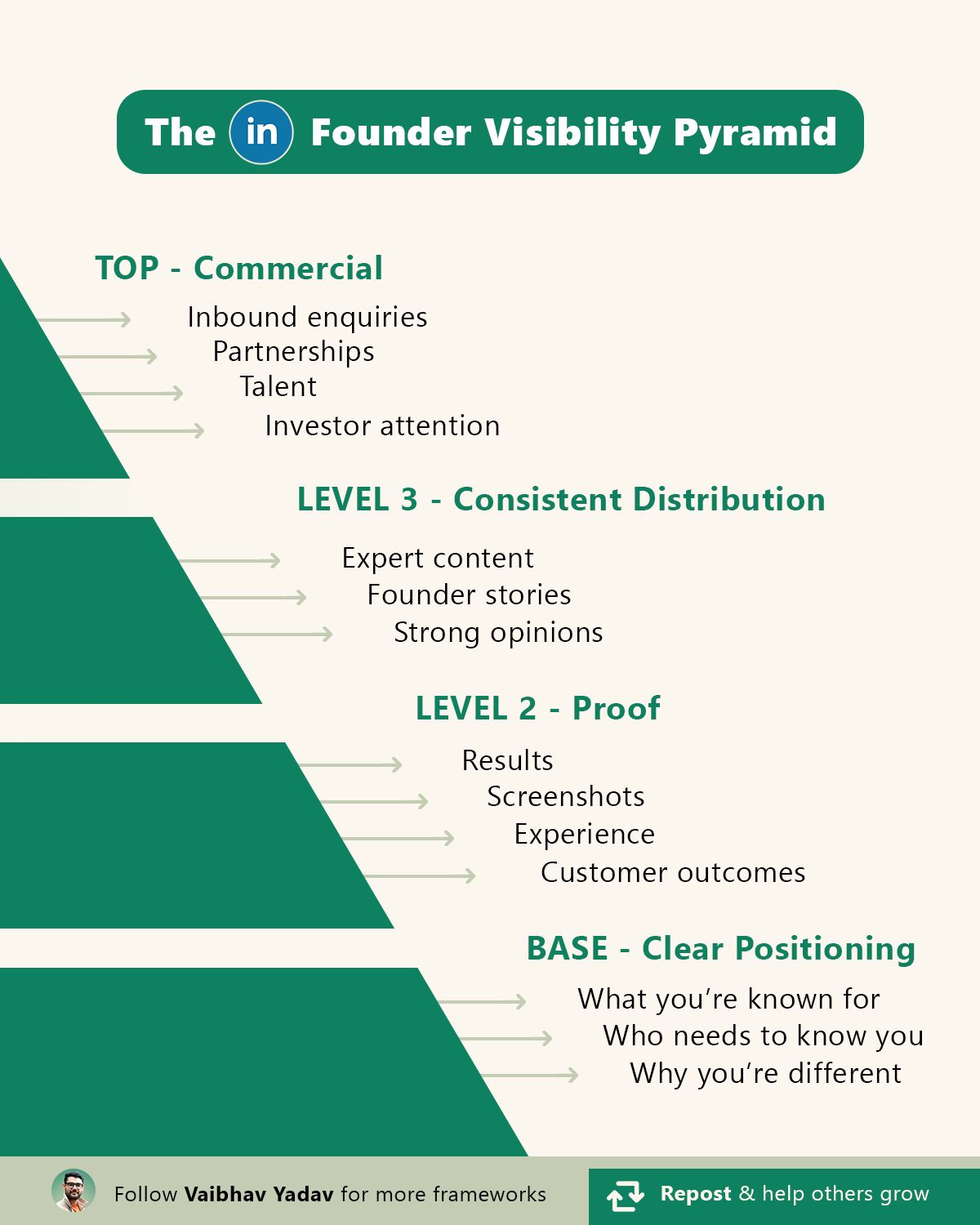
A founder's LinkedIn profile is credible when six things line up: a banner that says what you do, an About section built around your buyer's problem, a Featured section with proof, an Experience section that shows results, recent activity that shows a point of view, and recommendations from people who have worked with you. Check all six before you send outreach, pitch an investor or take a sales call.
Before a founder gets a reply, an introduction or a meeting, the other person usually looks them up. LinkedIn is where that happens. In a few seconds a stranger decides whether you look credible, clear and active, or dormant and vague.
This checklist covers the six markers that decide that first impression. Use it as a self-audit. Fix them in the order given.
Before you start: photo and headline
Two basics sit above everything else. Your photo should be a clear, recent headshot where your face is easy to see. Your headline should say what you do and who you do it for, not only your job title. "Founder" tells a stranger very little. "Helps [specific buyer] get [specific result]" tells them why to keep reading.
The six credibility markers
1. Banner
The banner is the largest thing on your profile and the one most founders waste on a stock photo.
What good looks like: In five seconds a stranger can tell who you help and what you do. It carries one promise, the text is readable on a phone, and nothing important sits behind your profile photo.
Quick fix: Replace it with one clear line that names your buyer and the outcome you create. Keep the text away from the bottom left, where your photo covers it.
- One promise, in plain words
- Readable on mobile
- Text clear of the profile photo
- Matches your headline
2. About section
Only the first two lines of your About section show before the "see more" link. Most founders spend them on their biography.
What good looks like: The opening lines describe the problem you solve for a specific buyer. The rest covers what you do, a little proof, and how to get in touch. It is written in the first person and sounds like you.
Quick fix: Rewrite the first two lines so they start with your buyer's problem. Then move your background below it. End with one clear next step.
- Starts with the buyer's problem, not your biography
- Says what you do and for whom
- Includes one piece of real proof
- Ends with one clear next step
3. Featured section
Featured is the only part of your profile where you choose exactly what a visitor sees first. Many founders leave it empty.
What good looks like: Three to five items that prove you can do what you say. For example a case study, your best post, a newsletter, a free resource and a way to book a call. The most useful item for a new buyer comes first.
Quick fix: Add your single strongest piece of proof first, then a way to take the next step.
- Three to five items, not ten
- Strongest proof first
- At least one way to take a next step
- Every link works
4. Experience section
Experience is where a buyer or investor checks whether you have earned the right to give advice.
What good looks like: Your current role explains what the company does, who it serves and what you are responsible for. Earlier roles describe decisions and results you can stand behind, not a list of duties.
Quick fix: Rewrite each role in two or three lines that say what you built or changed. Use only results you can verify. Leave out any number you cannot back up.
- Current role explains the company and your job in it
- Earlier roles show results, not duties
- Only verifiable claims
- Consistent with your About section
5. Activity
A profile with no recent activity looks dormant, however good the rest is. Activity is also the marker that compounds over time.
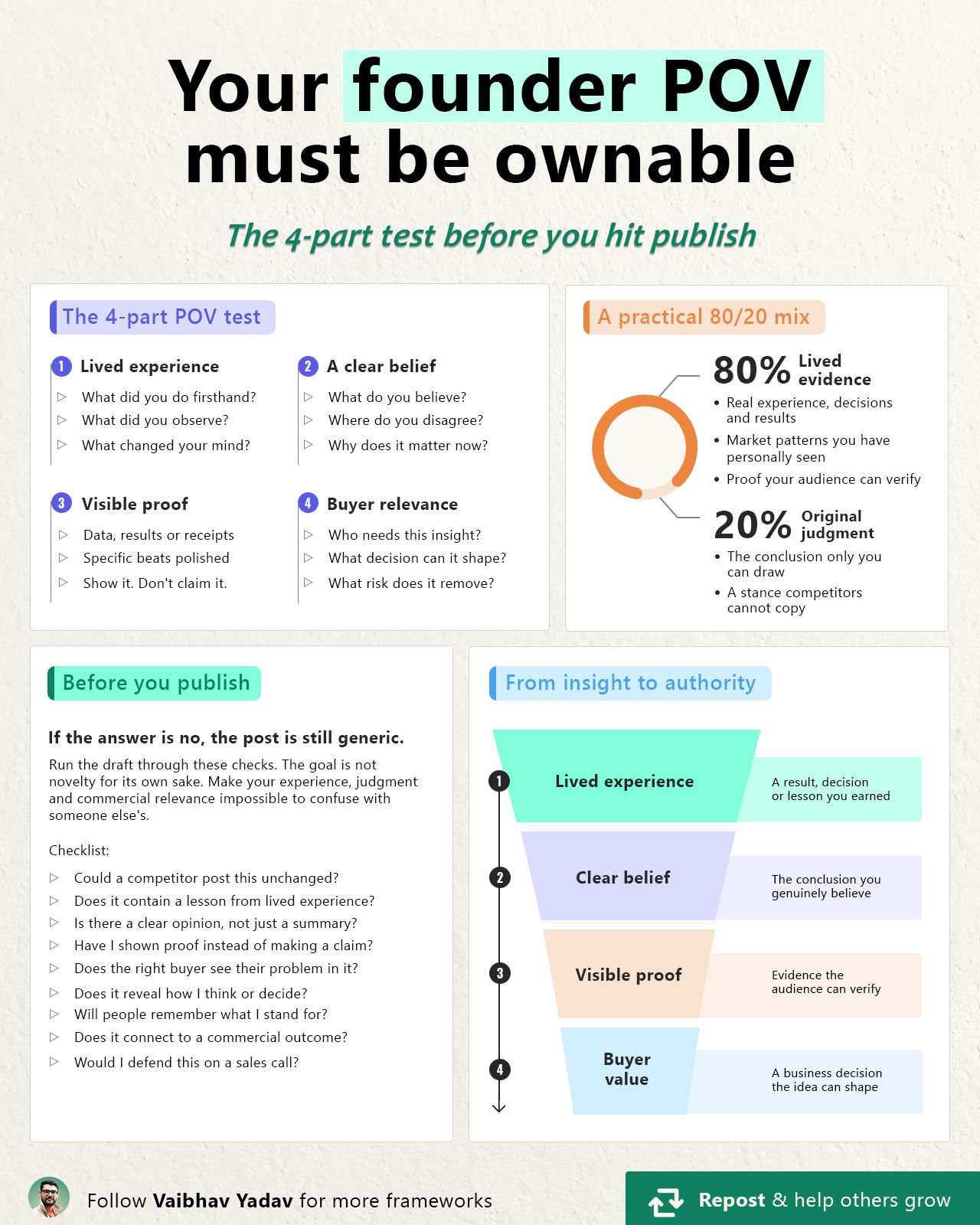
What good looks like: You have posted or commented recently, and your posts show a point of view rather than reshared news. A visitor can tell what you believe about your market. If you want a way to test an idea before you post it, read the 4-part founder POV test.
Quick fix: Start with comments on posts from people in your market, then publish one post a week built on a real decision or experience.
- Something posted or commented on recently
- A clear point of view, not just reshares
- Topics your buyers care about
- Consistent, not constant
We tested this on our own founder first. His profile went from 740 to 8,056 followers over twelve months, and you can read how in the Vaibhav Yadav case study.
6. Recommendations
Recommendations are the only part of your profile that other people write. That makes them the hardest marker to fake, and one of the most trusted.
What good looks like: Two or three recommendations from clients, partners, investors or colleagues who can describe a specific result. They are recent and they say what you did, not only that you were great to work with.
Quick fix: Ask the people who saw your work up close. Tell them which project you would like them to mention. Two specific recommendations beat ten generic ones.
- From people who saw the work
- Mentions a specific project or result
- Recent
- Includes your buyer type where possible
How to score your profile
Give yourself one point for every marker that meets the "what good looks like" description.
- 5 to 6 points: your profile is ready. Send the outreach, take the call.
- 3 to 4 points: fix the missing markers this week before you start outreach.
- 0 to 2 points: pause outreach. A weak profile can cost you replies from people you wanted to reach.
What order to fix things in
Start with the banner and the About section, because they are seen first. Then fill in Featured and Experience. Fix activity next, because it takes time to build. Collect recommendations in the background while you do the rest.
Common mistakes founders make
- Writing the About section as a biography
- Using a banner that says nothing
- Listing duties in Experience instead of results
- Leaving Featured empty
- Posting only reshares and never sharing an opinion
- Asking for generic recommendations
Do it yourself, or have it done for you
If you have the time, you can work through this checklist yourself in a focused afternoon. If you would rather have it done properly, our LinkedIn profile optimization service rebuilds your banner, headline and About section around what you sell. For the posts that keep your profile active, see our LinkedIn ghostwriting service. Either way, you can start with a free profile audit.
Frequently asked questions
What should a founder's LinkedIn profile include?
Six things matter most: a clear banner, an About section built around your buyer's problem, a Featured section with proof, an Experience section that shows results, recent activity that shows a point of view, and recommendations from people who have worked with you. A clear photo and a headline that says what you do help too.
How long does it take to fix a LinkedIn profile?
If you already have your story and proof ready, the banner, headline and About section can be rewritten in a focused session. Gathering proof for Featured, building activity and collecting recommendations take longer, because they depend on real work and real people.
Do I need to post to have a credible LinkedIn profile?
You do not need to post every day. But a profile with no recent activity looks dormant, so regular posts or comments matter. One post a week built on a real experience is a realistic starting point.
Should my headline be my job title?
Not on its own. "Founder" tells a visitor very little. A better headline says what you do and who you do it for, so a stranger understands your value in one line.