How founder branding builds buyer trust before the first sales call
 Written by Vaibhav Yadav, founder of Be No Stranger. Updated 14 November 2026.
Founder branding builds buyer trust before the first sales call by making sure that everything a buyer finds when they look you up, on LinkedIn, on your website and on Google, shows who you are, what you have done and how you think. Buyers research a founder before they agree to talk, and a prospect who has already read your posts and used your free resources arrives to clear their doubts and not to decide whether you are real, which changes the first call from a pitch into a conversation.
Before a buyer agrees to a first call with a founder, they almost always look the founder up. They want to know what kind of person they are dealing with, what the company's track record is, how well it can help them and how it has positioned itself, and they go looking for that wherever they can find it. This guide explains what buyers check, what it costs a founder when there is nothing to find, and what changes in the sales conversation when the trust is already there.
What buyers check before they agree to a call
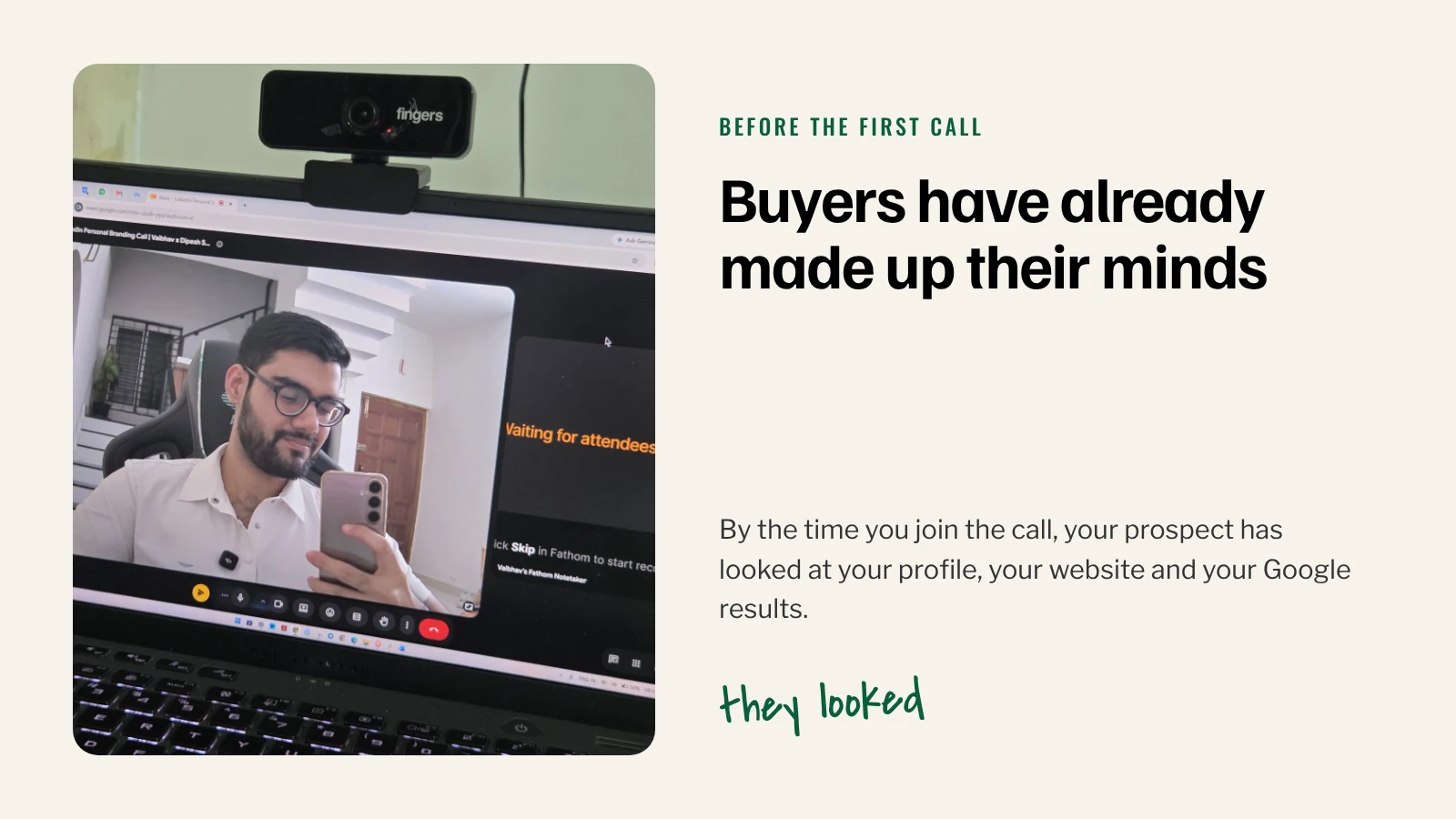
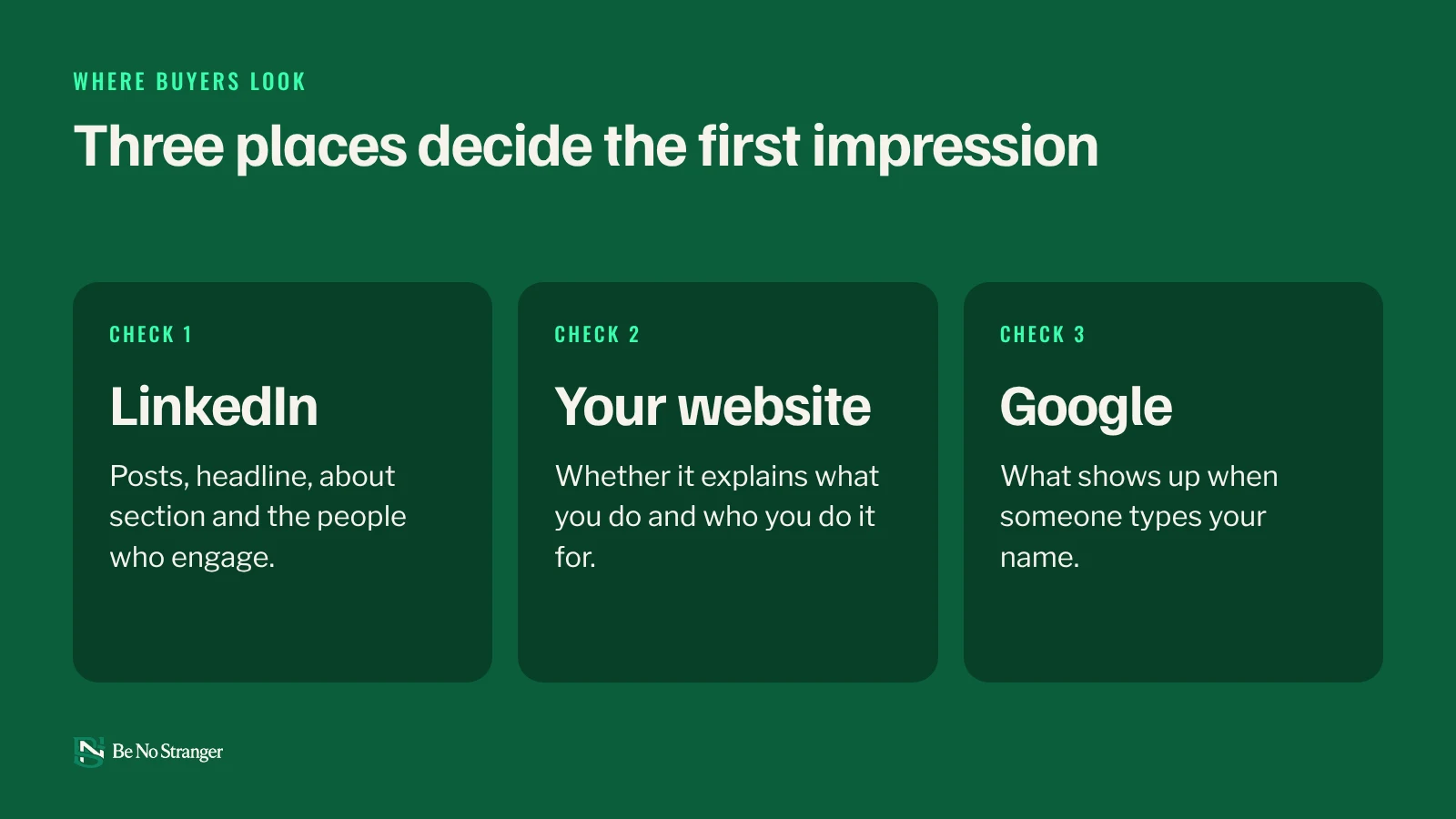
Buyers read your LinkedIn profile, your posts and your company page. They open your website and look at how it presents the work, and they search your name on Google to see what else comes up. They are looking for a track record, for signs of how you think, and for evidence that the person behind the company is real and has done what the company says it does. The founder's profile is usually the first place they look, because it is the fastest way to see the person and the work together.
What a weak online presence costs a founder
When a buyer looks you up and finds almost nothing, the trust that you built in conversation leaks away before the call even happens. This is something we have seen in our own business. When we did cold outreach without a website, results were poor, because the people we messaged looked us up, found nothing, and had no reason to believe we were legitimate. In a time when people increasingly want to deal with other people and not with chatbots or anonymous companies, legitimacy is one of the first things a buyer tests, and a missing or thin presence fails that test quietly, without anyone telling you.
Why offline connections are not enough
Founders with strong offline reputations often assume that their network will carry them, and it does carry them as far as the people who already know them. Sooner or later, everyone searches for you online, including the people your network introduces you to, and if they cannot find you there, the trust that came with the introduction starts to weaken. Offline you can only reach a handful of rooms and events, while online the same expertise can reach far more people.
What changes on the first call when trust is already there
A prospect who has read your posts, watched your videos, looked at your website and used your free resources arrives with most of their questions already answered. They have seen that you are willing to help before they have paid anything, so the call is no longer about deciding whether you are a stranger after their money. You are not there to sell, you are there to answer their remaining questions, and conversations that start that way tend to lead to better clients and longer relationships.
A real example: Michelle Tillis Lederman
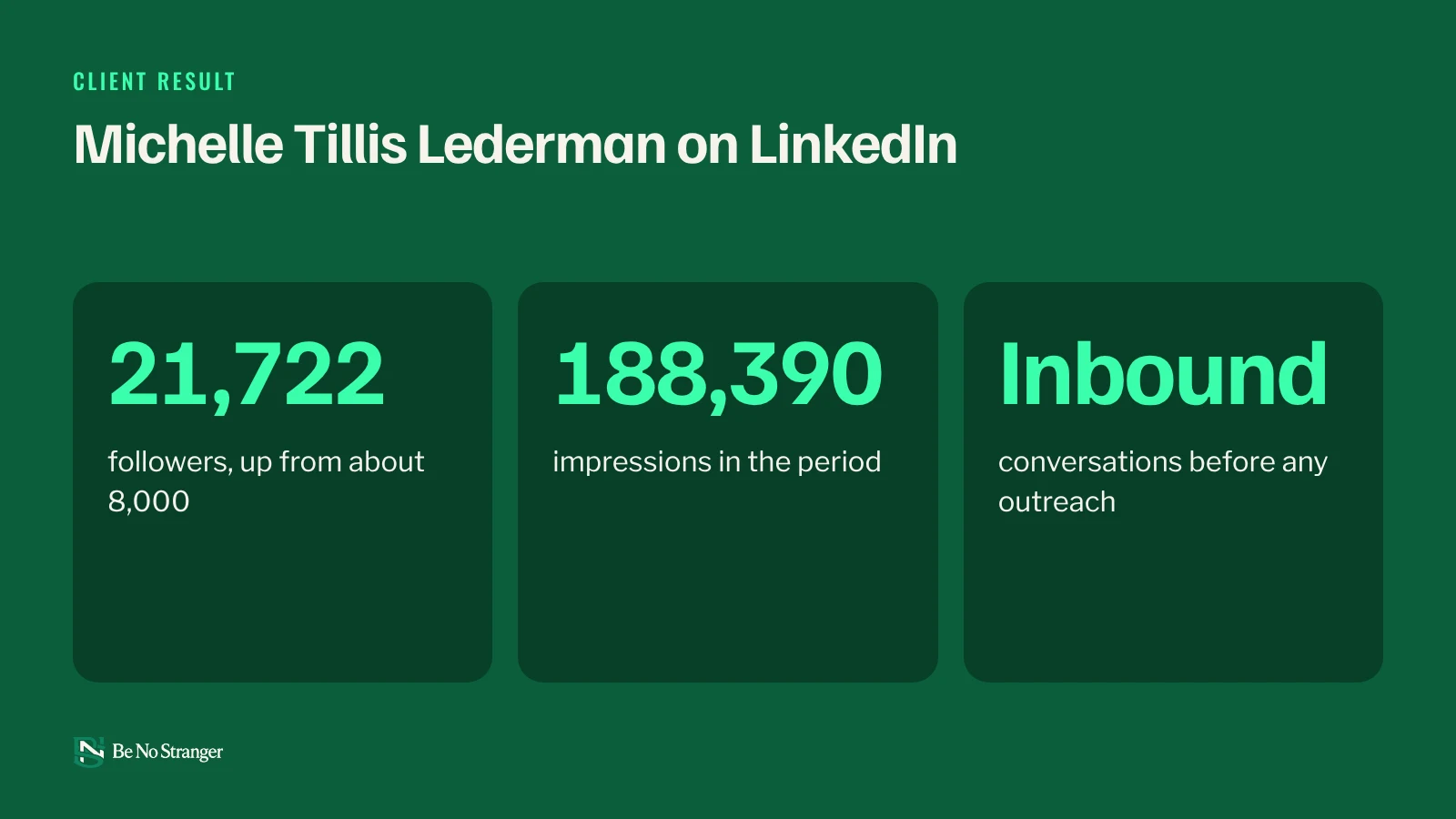
Michelle Tillis Lederman is a US-based leadership speaker and author with a strong offline presence, but offline she could only appear at a limited number of events. We built her LinkedIn presence around one clear voice across several formats, and her following grew from about 8,000 to 21,722 followers, with 188,390 impressions in the period measured. Combining the offline reputation with a consistent online one brought her more clients and more speaking opportunities, including keynote sessions inside companies and panel appearances, and press features. You can see the numbers and screenshots in her full case study.
What we have seen on our own profile
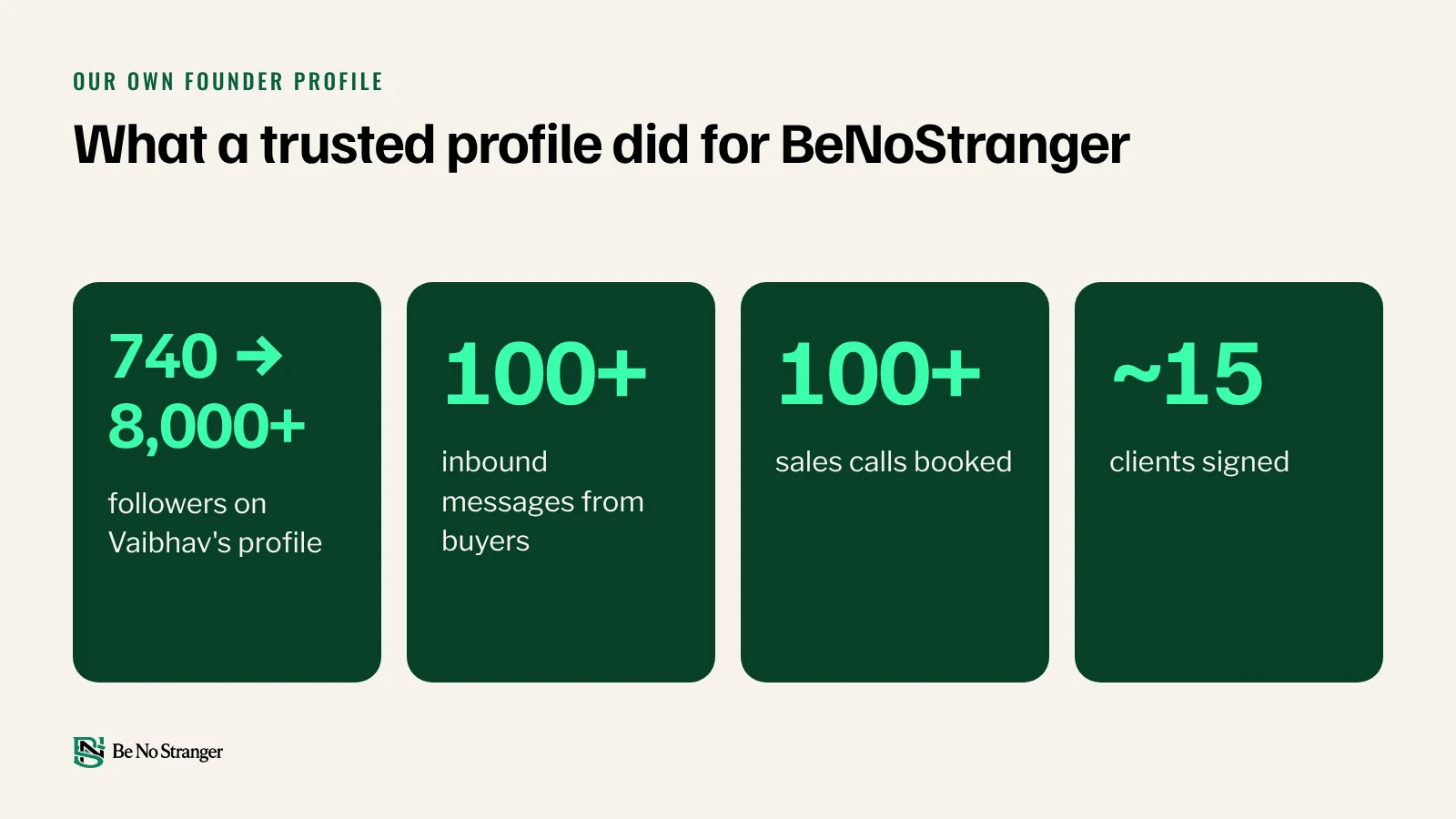
We apply this to ourselves first. Vaibhav's profile grew from 740 to more than 8,000 followers, and it has brought in more than 100 inbound messages, more than 100 sales calls and around 15 clients. The founder's profile is where we test everything, so that we never experiment on a client's account, and what we offer clients has already been tried on our own. The full numbers are in the founder case study.
What a founder branding service should do
A service that is really building trust should do more than publish posts. It should rebuild the profile first, so that a buyer who clicks through lands on a credible founder, and it should build a content strategy around your own stories and opinions instead of generic topics. It should give you free ways to check where you stand before you pay anything, it should keep you informed without making you chase anyone, and it should never post anything you have not approved. Ask any provider you are considering how they handle each of these.
How we handle trust with clients
Every client gets a proper onboarding and a recurring process, and we build a custom strategy for each profile instead of a generic one. We ask every client to switch on two-factor authentication, we take approval before anything is posted, and we make sure that whatever goes out from a client's account is something they could say comfortably in a room full of people, so that they are portrayed as they are in real life. We coordinate with the client's team where needed, we get on calls whenever the client wants, and we keep the client in the loop so that they never have to chase us.
Free ways to check your own trust signals
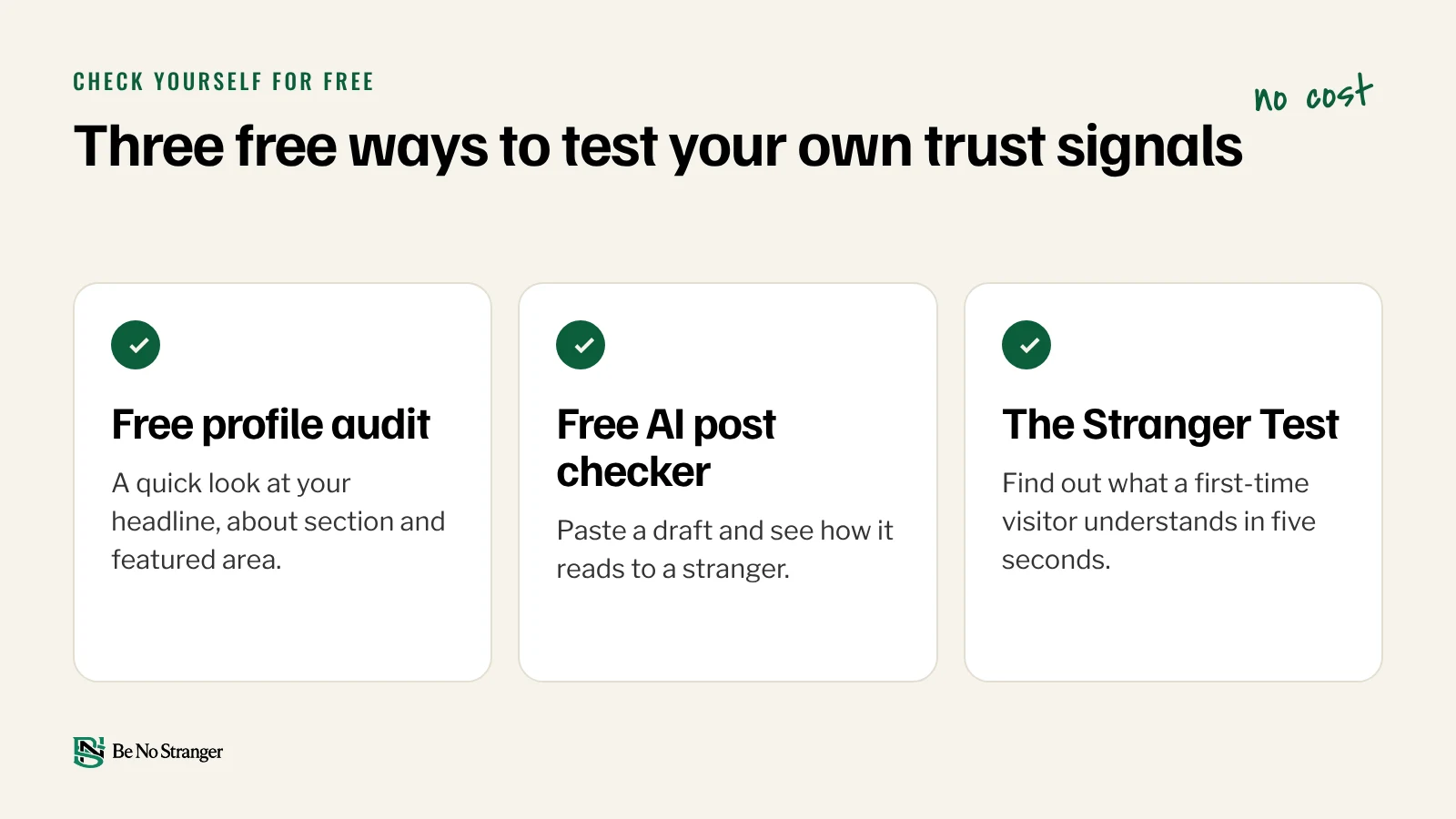
- The Stranger Test, a short yes or no scorecard that shows how a buyer would read your profile and how much work it needs.
- A free profile audit, where you send us your LinkedIn link and we review your profile, which many agencies charge for.
- The AI LinkedIn post checker, where you can paste a post and check whether it reads as AI-written.
Where to start
If you want to see how a buyer reads your profile today, start with the free profile audit. For what each plan includes, see our pricing, and for how we write posts from your own stories, read how we write LinkedIn posts from founder interviews.
Frequently asked questions
How do founder branding services help buyers trust a company before the first sales call?
They make the founder easy to verify. A rebuilt LinkedIn profile, posts that show how the founder thinks, a consistent website and free resources give buyers the track record and the sense of the person that they look for before agreeing to a call.
What do buyers look at before a first sales call?
They typically read the founder's LinkedIn profile and posts, the company page and website, and the results that come up when they search the founder's name on Google.
What does a weak LinkedIn profile cost a founder?
It costs trust before the conversation starts. Buyers who look a founder up and find little or nothing have no evidence that the company is legitimate, which slows or ends outreach and makes the first call harder.
How does the first sales call change when a buyer already trusts you?
The buyer has already seen your content and your free resources, so the call is about answering their remaining questions instead of proving who you are, and it usually moves faster and starts at a deeper level.
Is a strong offline reputation enough for a founder?
Not on its own, because buyers, including people introduced by your network, search for you online as well, and offline you can only reach a limited number of rooms and events.
Is there a free way to check how buyers see my LinkedIn profile?
Yes. The Stranger Test scorecard and the free profile audit both show how a buyer would read your profile and what to fix first.