LinkedIn profile optimization services
 Vaibhav Yadav · Founder, Be No Stranger · 22 October 2026 · 11 min read
A good LinkedIn profile optimization service for founders and business owners fixes the whole profile and not just the headline, which means the profile picture, banner and headline working together, an About section written in your own voice, a Featured section people can interact with, real posts, a proper Experience section, skills and recommendations. When you compare services, look at how much business you can generate from the platform and not at vanity numbers, make sure nothing is written with AI, check the quality of the posts you get, and never give anyone full access to your account without two-factor authentication.
If you are a founder or a business owner looking at LinkedIn profile optimization services, there is a good chance that your profile is working against you without you knowing it, because most profiles I look at every single day have a lot of things broken on them, and the owners have no idea. In this article I will walk you through the profile section by section, tell you what usually goes wrong in each one and what it should look like instead, and then I will tell you exactly what to look for when you are comparing services, so that you spend your money on something that actually brings you business and not just a nicer looking page.
What is broken on most LinkedIn profiles
There are a lot of things broken on a typical profile, and the easiest way to see them is to go through it from the top, the way a stranger does when they land on it. The first thing they see is your profile picture, your banner and your headline, and after that comes your About section, your Featured section, your posts, your Experience, your Skills and your Recommendations. Each one of these has its own common mistake, and most people make several of them at the same time, which is why a profile can look busy and still not leave a single good impression on the person who matters.
Your LinkedIn profile picture, banner and headline
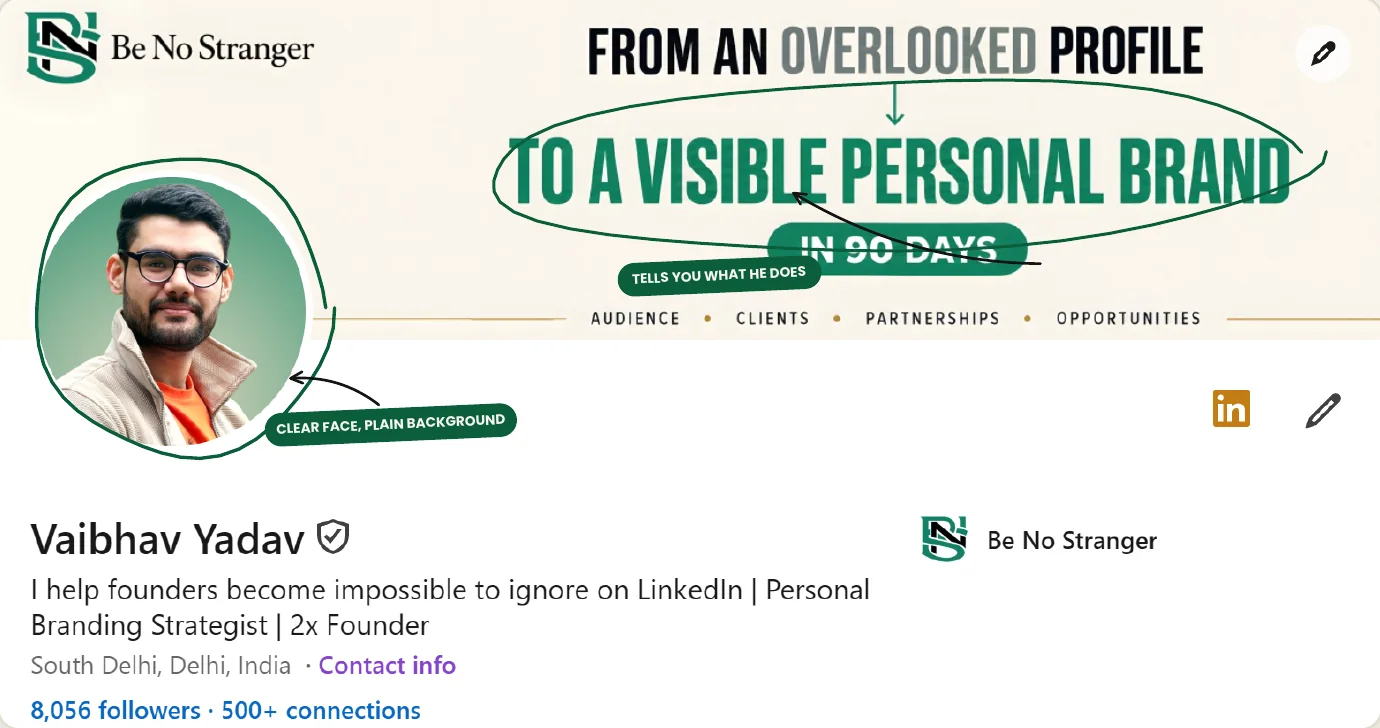
Let me start with the profile picture, because it is where most people go wrong first. Most people have a random photo that has been sitting there for years and technically works, or they have a serious or a grumpy face in it, which does not leave a very good impression on anyone who sees it. And that is not even the worst part of it.
The banner is usually worse. Most people do not have a banner at all, and the ones who do have one that is very much broken, with a stock image, a photo of a bridge or some other picture that has nothing to do with the company or with what they do. The banner and the profile picture are the main things that people see, and your profile picture is the thing that shows up every time you comment or do anything else on the platform, so it deserves a lot more attention than the casual, light handling most people give it.
Then comes the major part, which is the headline. People write just anything over there. Some put a job title and nothing else, some put a string of buzzwords, and some put something so weird that you cannot work out what the person actually does. Your headline, your banner and your profile picture are the three things a person sees in the very first go, so all three need to be in sync with each other and say the same thing. Otherwise you are wasting the biggest piece of real estate on your profile, and there is no point in fixing anything below it if the top is sending the wrong message.
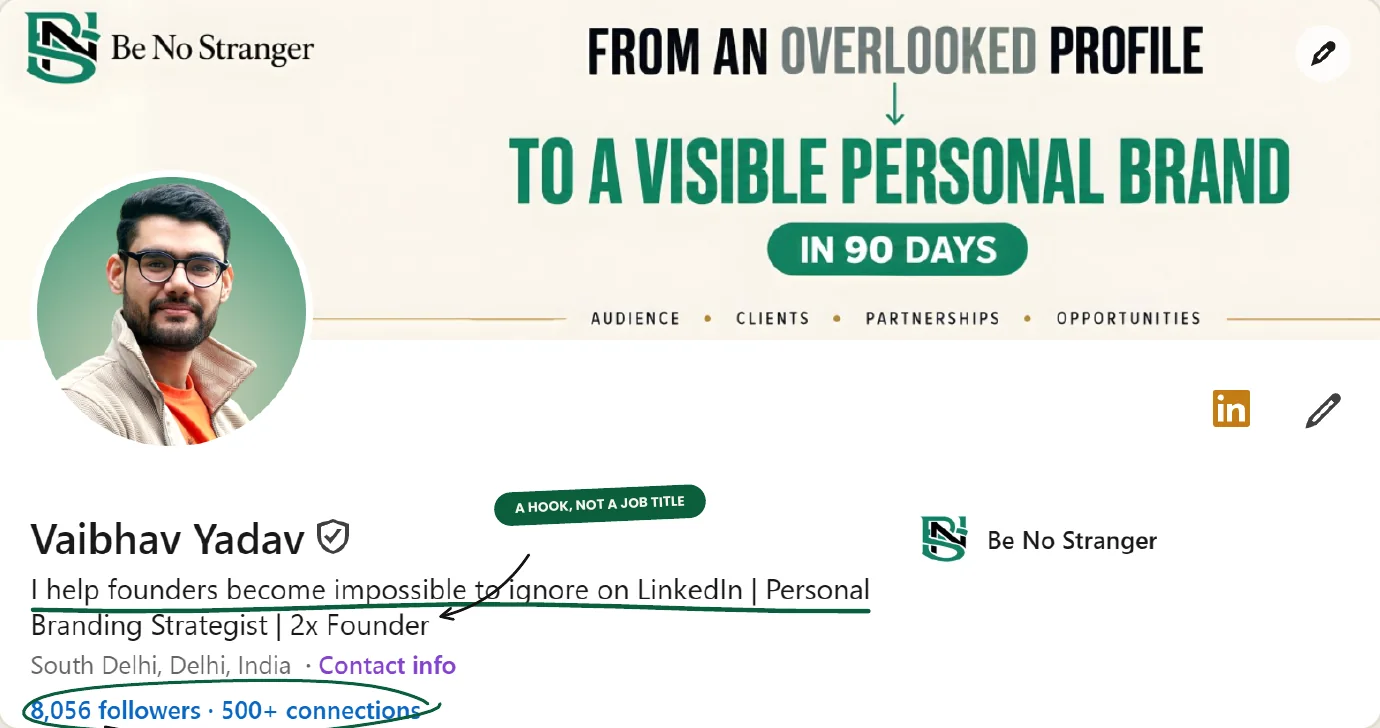
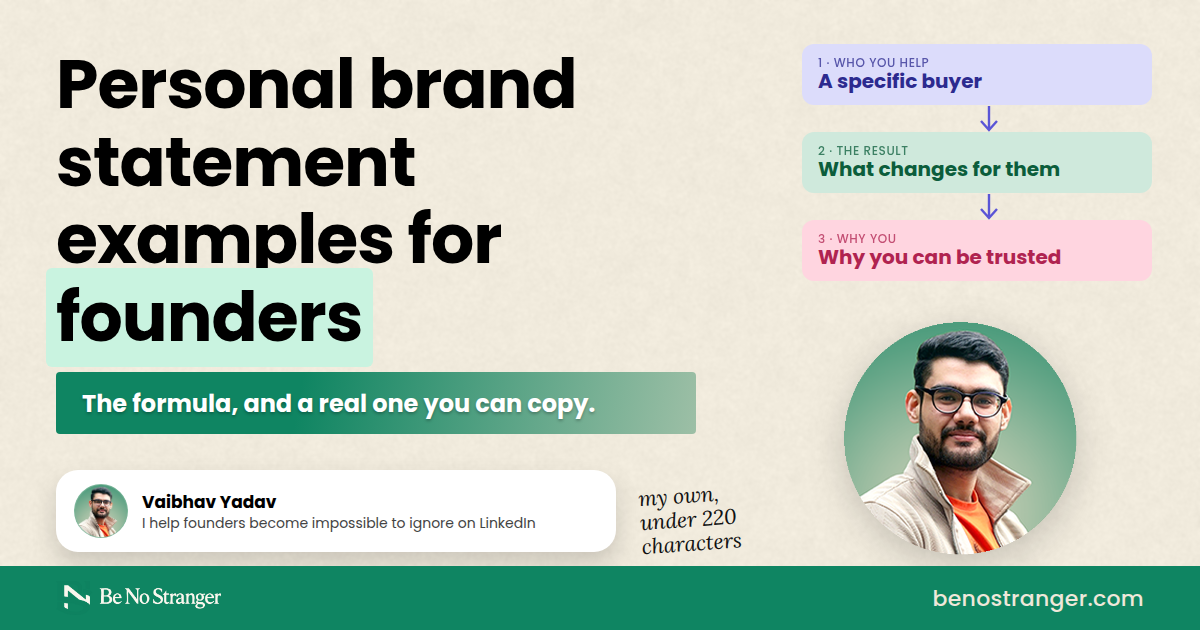
If you are not sure what your headline should say, read our guide with personal brand statement examples for founders, which shows how to build one from scratch.
Your About section
Most people write their About section in the third person, as if somebody else has written their biography for them, and it reads like a document that nobody wanted to write and nobody wants to read. The About section is the place where you should sound like yourself, and there is a second reason to spend time on it, which is that it also works as LinkedIn SEO. The more effort you put in there, and the better you use the words you want to be found for, the better your chances are of showing up when somebody searches.
You also do not need to touch your About section every week. LinkedIn takes at least two or three weeks to settle in and soak everything up before it gets you the results you are after, so write it properly once, give it time, and do not keep changing it because you are impatient.
Your Featured section
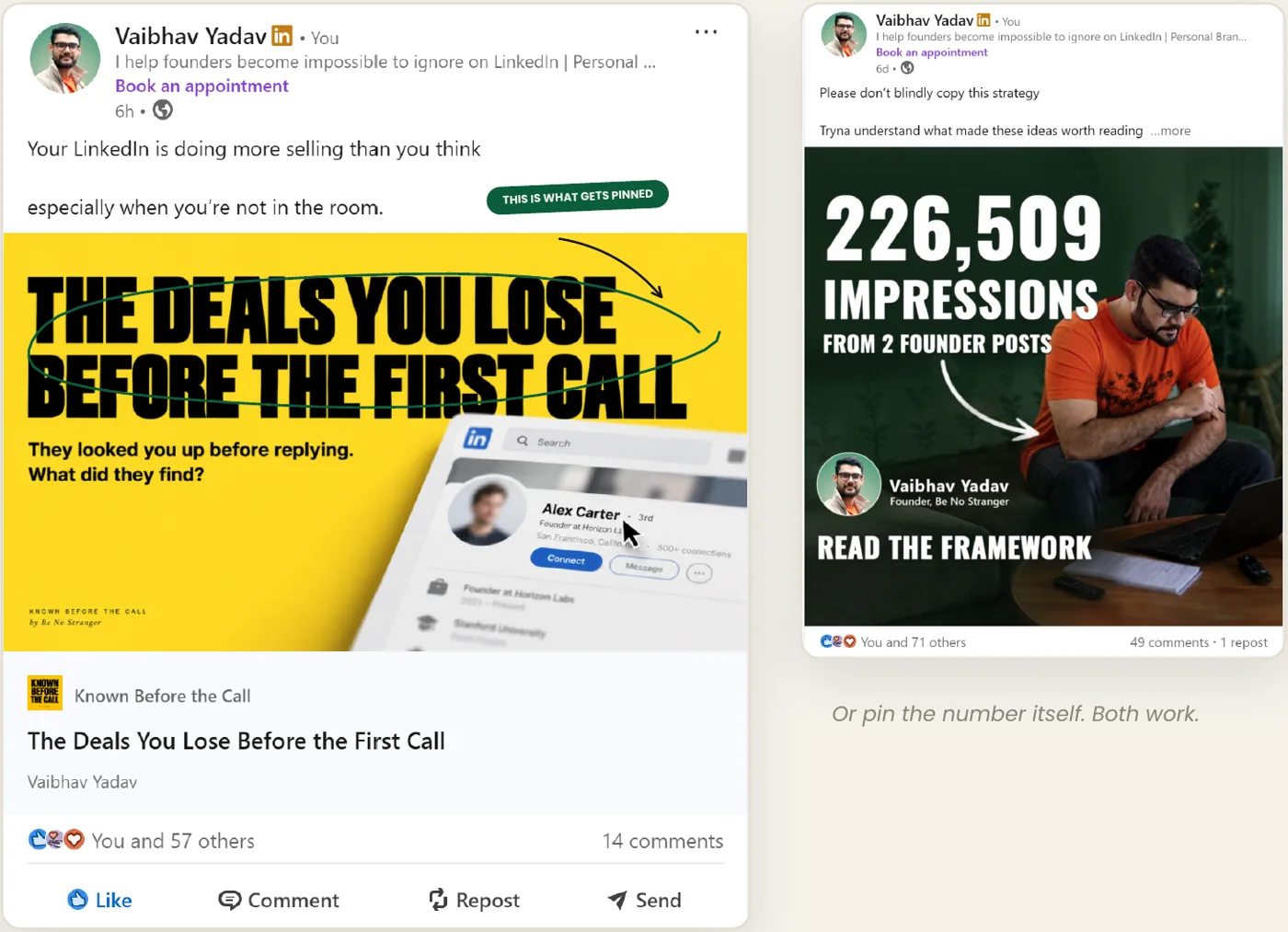
A lot of people simply pin a post in their Featured section and leave it there. The Featured section is meant to give your audience something to play with, something they can interact with. If you are a SaaS company, you should have something over there like a product walkthrough, a demo or a trial. If you are providing a service, you should use it as a lead magnet, so that it becomes a channel for acquiring new customers, where you get their emails and then take the conversation forward from there. It is one of the most underused parts of a profile, and it can quietly bring you business every single day if you set it up properly.
Your posts
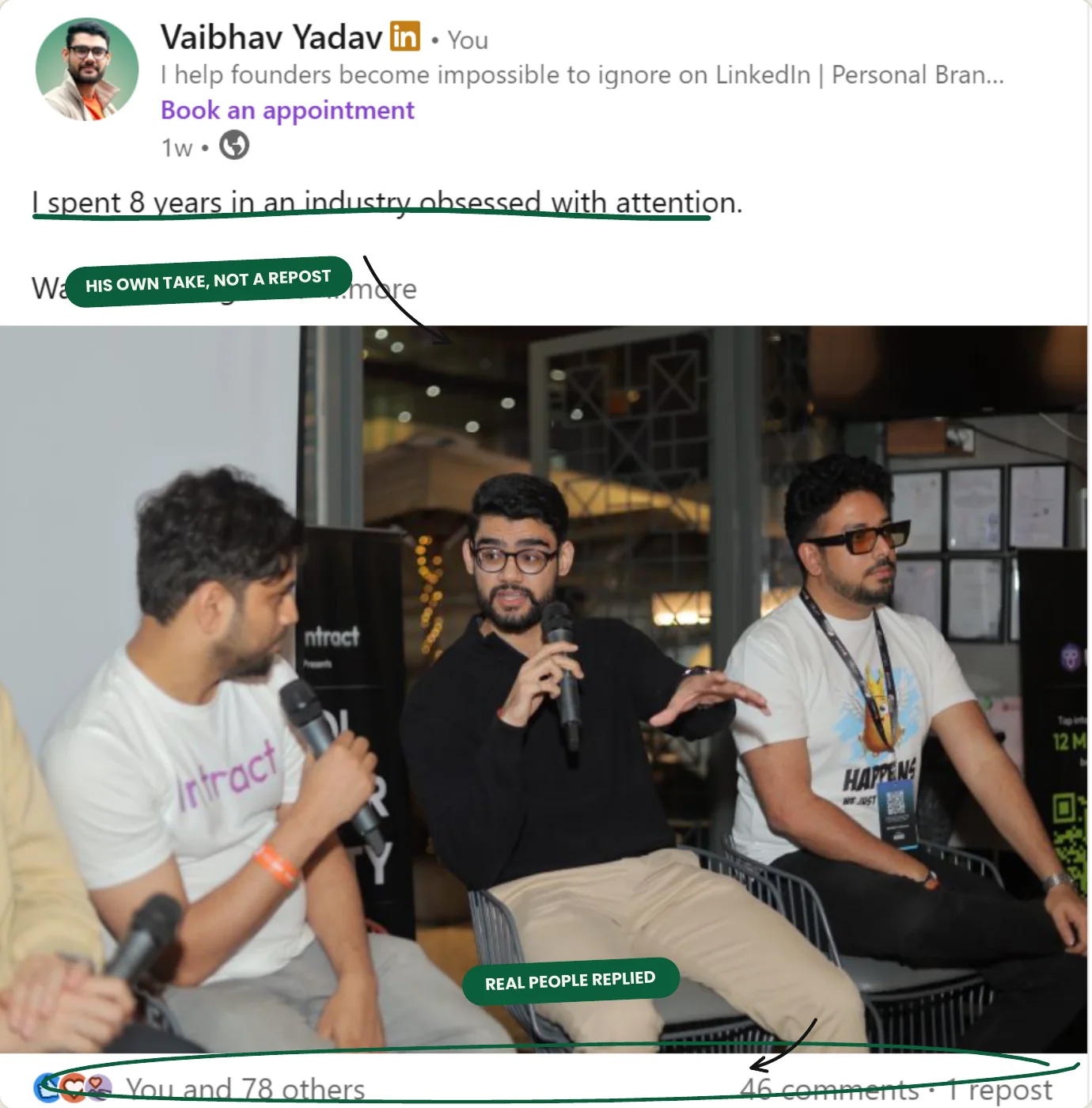
Then you come to the posting section, and the first problem is that a lot of people are simply not posting. The second problem is that a lot of those who do post are using AI, and the thing is that it does not matter how good the tool is, because AI is now visible to us. A lot of people can spot AI content from the way it writes, with the short sentences, the punctuation and the flawless grammar with no errors at all, and people know that humans are not that perfect. When your profile is sending out posts like that, the visitor who clicks through sees it straight away, and it takes away the trust that the rest of your profile has built up.
Your Experience, Skills, Endorsements and LinkedIn recommendations
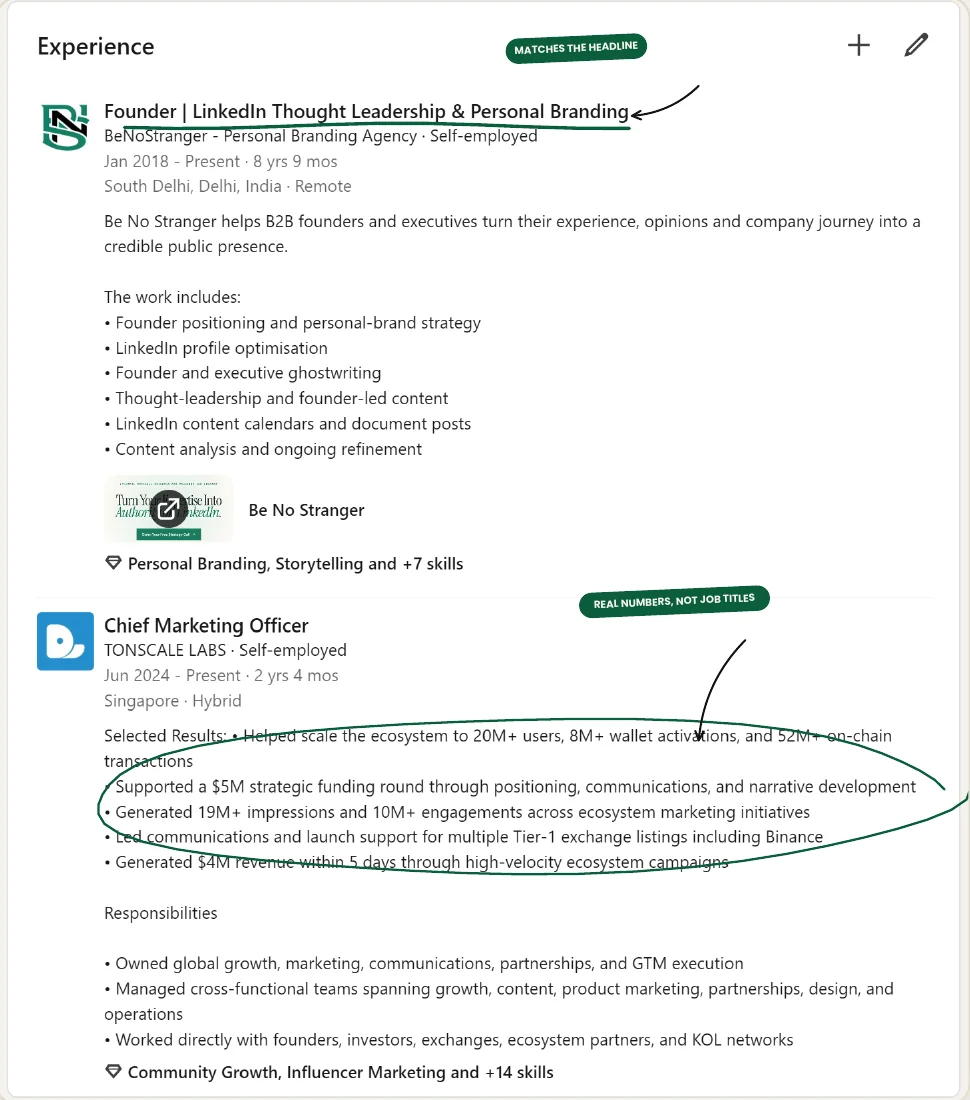
Many people do not have their Experience section sorted out at all, and some have nothing in it. People want to know what credentials you have, and you may have studied at a top university, but if you are not telling anyone that you studied there, no one gives a damn about it. So fill it in properly, with the roles, the places and the results that show who you are.
After that comes the Skills section, which also needs to be sorted out, because the skills you list are the things that other people can endorse you for, and those endorsements are visible proof sitting on your profile.
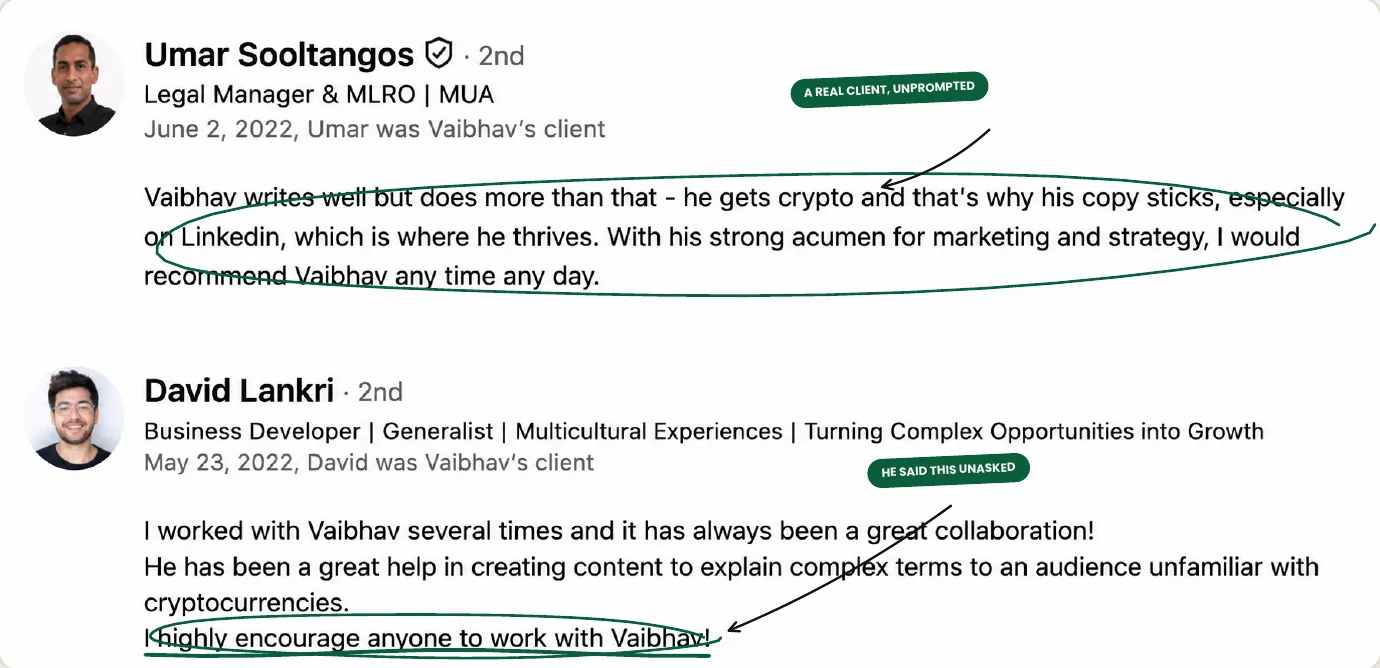
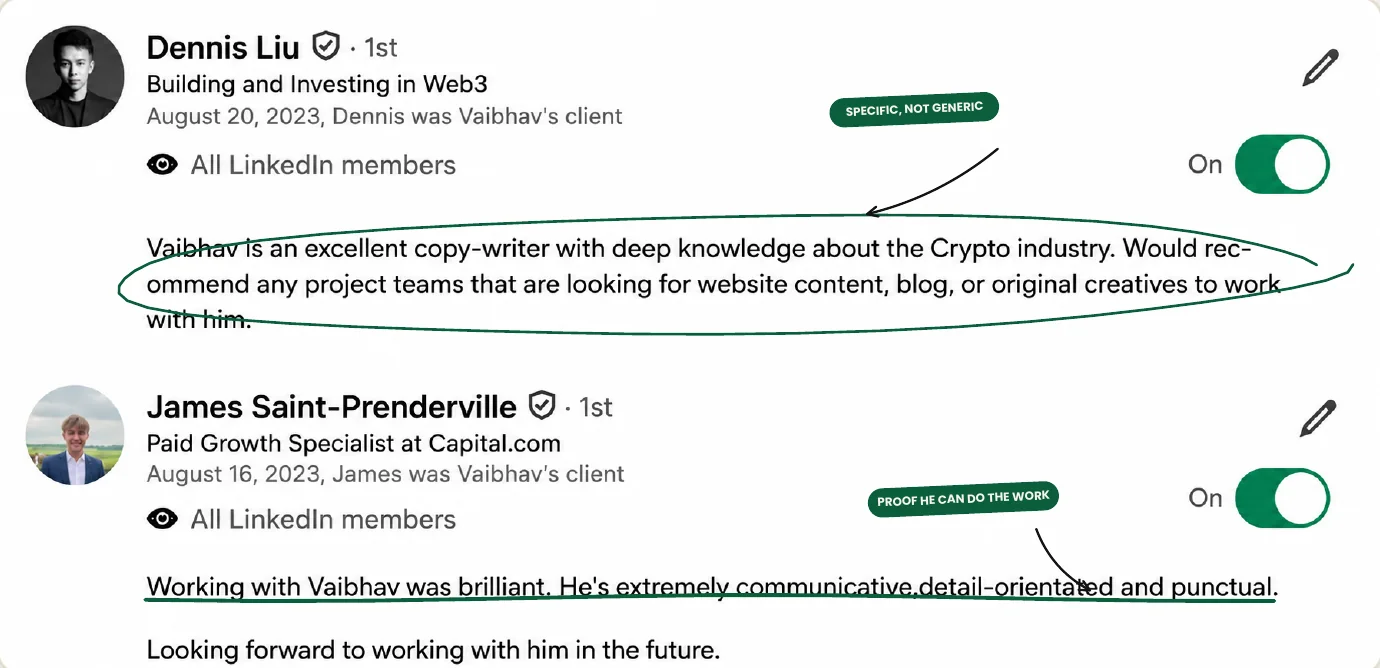
Last is the Recommendations section. A lot of people do not have any because they feel like there is no need for them, but the more people you have who put their trust in you in a way that anyone can see on your profile, the better it is for you. That is how people trust you, and recommendations are one of the major factors in building the trust element, so do not skip them.
For a quick way to go through all of these, use our LinkedIn profile checklist for founders.
What we do in a profile optimization at Be No Stranger
Obviously, we do not do a profile rewrite, because that makes it sound like we just change a few words and hand it back. We are engineers, so we architect the entire profile in a way that the foundation stays solid for the coming years. Instead of randomly changing things, we work from engineered templates that we have refined over the years of working with clients throughout the world, and we build the profile around the keywords you want to be known for. We also make use of LinkedIn search, so that people come to you, instead of you chasing them every single time things are going south or north or in whichever direction.
And we handle things end to end. We are not like other service providers, because we give all the time in the world to our clients and we make sure that everything that needs to be done is actually done. To see what that looks like on a real profile, read the Vaibhav Yadav case study, and for the full service, see our LinkedIn profile optimization services page, which is built for founders and business owners.
How to compare LinkedIn profile optimization services
If you are comparing services, here is what I would ask and watch for, and it is very simple.
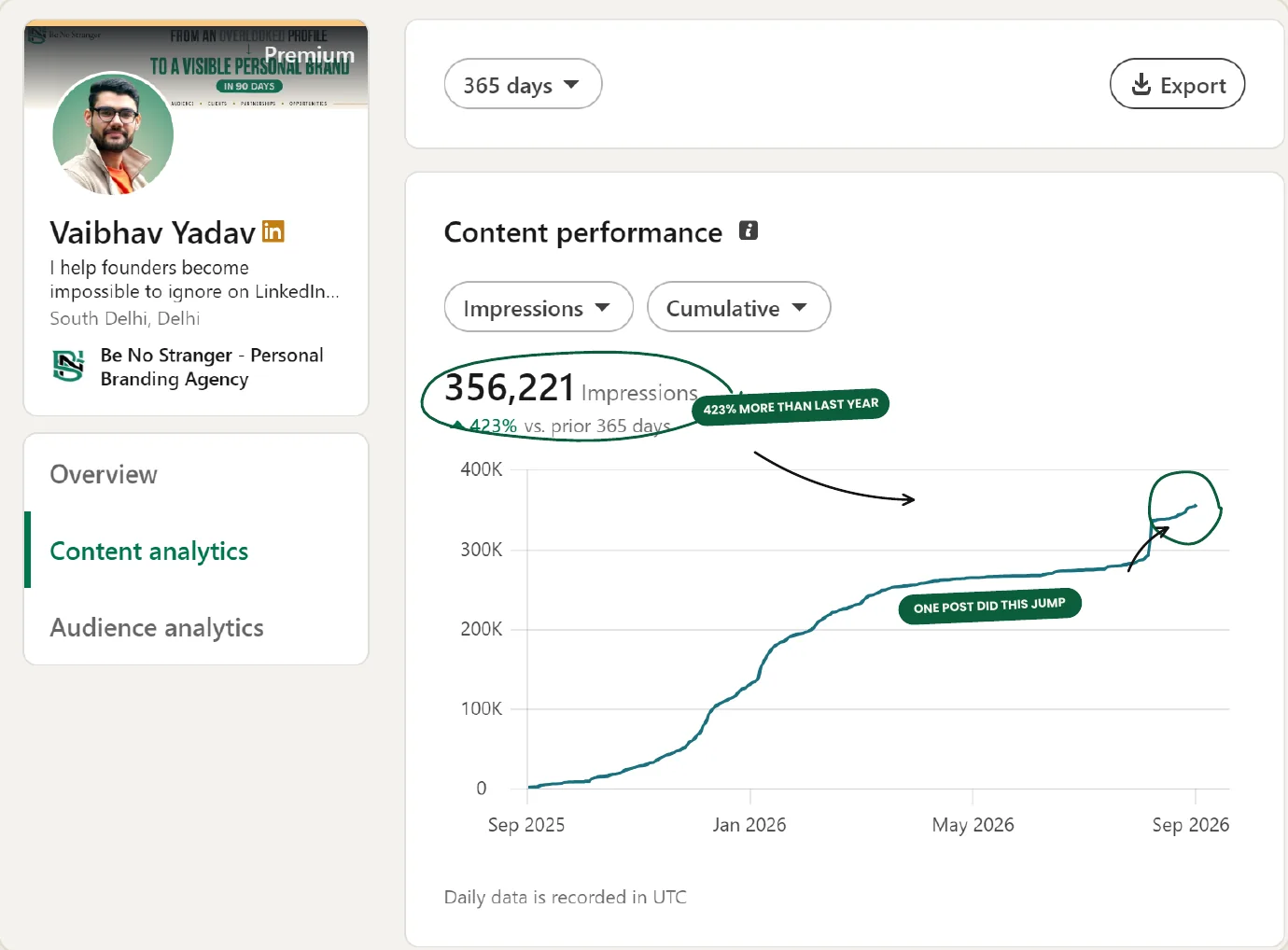
Do not go behind vanity. Go behind how much business you can actually generate from the platform, because even if you are chasing vanity, generating business can never be bad, and otherwise what is the point of doing all of this? If you are spending money on something, it had better give you some ROI in some sense.
Secondly, make sure that no AI is being used at all, and that the work is done manually, with a Pangram check on it and things like that, because if you are using AI you are going to be flagged and taken out, or you will be shadow banned, which is not an ideal situation to be in.
Apart from that, check how many posts you are getting and what the quality of those posts is, because LinkedIn is mostly a quality game and not a quantity game. The better the quality of what you put out there, the more chances you have of going viral and getting something fruitful out of this entire transaction.
Protect your account when someone else works on it
Whenever you give your account credentials to somebody, make sure that you have two-factor authentication sorted out, so that you can always be the one in charge. Never give your full account access to anyone, because without two-factor authentication, people can just log in to your account whenever they like. Also make sure that you are not logged in on many devices and accounts at the same time, because otherwise it can be flagged as an IP violation, and you might lose your account or end up restricted, which is not a good place to be.
The last thing, and this is something I keep telling people, is never to boost your post in the first 24 to 48 hours, because that gives LinkedIn the time to show it organically. If you cut that off, you will never know which post could have been an outlier performer, so give it 24 to 72 hours, see how it performs organically, and only then try boosting it. LinkedIn boost is also not as targeted as Meta or Instagram, so it is usually better to let your posts grow organically. And do not be a news poster. Be somebody who has their own thoughts and opinions.
Want a person to look at your profile?
If you would like someone to look at how your profile reads before you spend anything, or you want to see exactly what our LinkedIn profile optimization services cover, start with a free profile audit, which is a short video teardown recorded by a person, and it tells you what to fix first.
Frequently asked questions
What is a LinkedIn profile optimization service?
It is a service that fixes your whole LinkedIn profile, including the profile picture, banner, headline, About section, Featured section, posts, Experience, Skills and Recommendations, so that the profile builds trust and shows up when buyers search.
What should a LinkedIn profile optimization include?
It should include a profile picture, banner and headline that work in sync, an About section written in your own voice with the keywords you want to be found for, a Featured section people can interact with, a proper Experience section, skills and recommendations.
How often should I update my LinkedIn About section?
You do not need to touch it every week, because LinkedIn takes at least two or three weeks to settle in and soak it up, so write it properly once and give it time.
What should I look for when comparing LinkedIn profile optimization services?
Look at how much business you can generate from the platform and not at vanity, check that nothing is written with AI, and check how many posts you get and how good they are, because LinkedIn is a quality game and not a quantity game.
Is it safe to give someone access to my LinkedIn account?
Never give anyone your full account access, keep two-factor authentication switched on so that you stay in charge, and make sure you are not logged in on many devices at the same time, because that can be flagged as an IP violation.
Should I boost my LinkedIn posts?
Not in the first 24 to 48 hours, because that gives LinkedIn time to show the post organically, so wait 24 to 72 hours, see how it performs, and only then try boosting, keeping in mind that LinkedIn boost is not as targeted as Meta or Instagram.